The Realm of Fascination is a knowledge base for The Good Cemetery guide. Learn more about what inspired the book:
AUTHOR | THE BOOK | RITES | DIGITAL | ART | BOOKS | GALLERY | ABOUT KALK BAY | ABOUT MEXICO
Towers of silence

Zoroastrian tradition considers a dead body—in addition to cut hair and nail-parings—to be nasu, unclean, i.e. potential pollutants. Specifically, the corpse demon (Avestan: nasu.daeva) was believed to rush into the body and contaminate everything it came into contact with, hence the Vendidad (an ecclesiastical code “given against the demons”) has rules for disposing of the dead as “safely” as possible.
To preclude the pollution of earth or fire (see Zam and Atar respectively), the bodies of the dead are placed atop a tower—a tower of silence—and so exposed to the sun and to birds of prey. Thus, “putrefaction with all its concomitant evils” “is most effectually prevented.”
The towers, which are fairly uniform in their construction, have an almost flat roof, with the perimeter being slightly higher than the center. The roof is divided into three concentric rings: The bodies of men are arranged around the outer ring, women in the second circle, and children in the innermost ring. Once the bones have been bleached by the sun and wind, which can take as long as a year, they are collected in an ossuary pit at the center of the tower, where—assisted by lime—they gradually disintegrate and the remaining material—with run-off rainwater—runs through multiple coal and sand filters before being eventually washed out to sea. The ritual precinct may only be entered by a special class of pallbearers, called nasellars, a contraction of nasa.salar, caretaker (-salar) of potential pollutants (nasa-).
In Greater Iran
In the Iranian Zoroastrian tradition, the towers were built atop hills or low mountains in desert locations distant from population centers. In the early twentieth century, the Iranian Zoroastrians gradually discontinued their use and began to favor burial or cremation.
In India
Following the rapid expansion of the Indian cities, the squat buildings are today in or near population centers, but separated from the metropolitan bustle by forest gardens. In Parsi Zoroastrian tradition, exposure of the dead is additionally considered to be an individual’s final act of charity, providing the birds with what would otherwise be destroyed.
In the past several decades, the population of birds of prey on the Indian subcontinent has greatly declined, in equal parts due to a) increasing pollution, b) growth of the cities such that the natural habitat of the birds was destroyed, and c) diclofenac poisoning of the birds following the introduction of that drug for livestock in the 1990s (diclofenac for cattle was banned by the Indian government in 2006). The few surviving birds are often unable to fully consume the bodies. Parsi communities in India are currently evaluating captive breeding of vultures and the use of “solar concentrators” (which are essentially large mirrors) to accelerate decomposition.
Towers of Silence, Wikipedia, the free encyclopedia
“The water in a vessel is sparkling; the water in the sea is dark.
The small truth has words that are clear; the great truth has great silence.” – TAGORE, from Stray Birds, CLXXVI
Rotting Body Row As India Mourns Missing Vultures
An Indian woman has ignited a furious row over the centuries-old tradition of using vultures to dispose of the dead by sending gruesome pictures of rotting corpses to hundreds of homes.
…Indian vultures have suffered the biggest decline of any animal species in the world, from millions in India to just a few thousand in little more than a decade, according to the Bombay Natural History Society.
Paul Peachey, Mumbai (AFP) Sep 02, 2006
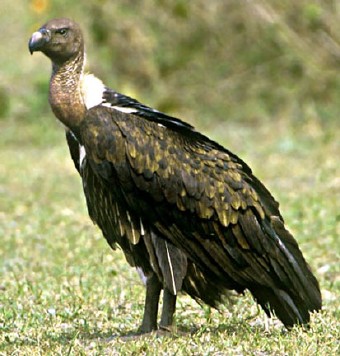
Indian Vulture Gyps indicus
2008 IUCN Red List Category (as evaluated by BirdLife International: Critically Endangered
– Bird Life International
– IUCN RED LIST of threatened species
DEATH: THE GREAT ADVENTURE
“The reign of the fear of death is well-nigh ended and we shall soon enter upon a period of knowledge and of certainty which will cut away the ground from under all our fears. In dealing with the fear of death, there is little to be done except to raise the whole subject onto a more scientific level, and – in this scientific sense – teach people to die. There is a technique of dying just as there is of living, but this technique has been lost very largely in the West and is almost lost except in a few centres of Knowers in the East. More of this can perhaps be dealt with later but the thought of the needed approach to this subject can rest in the minds of the students who read this and perhaps as they study and read and think, material of interest will come their way which could be gradually assembled and published.”
A Treatise on White Magic, Alice Bailey
 Consuelo Roland